In road construction, road rollers serve as core equipment for achieving efficient compaction. Classified by tonnage, rollers primarily fall into three categories—small, medium-sized, and large—each offering distinct advantages in construction scenarios and compaction performance. Below is a breakdown of tonnage classifications and application domains:
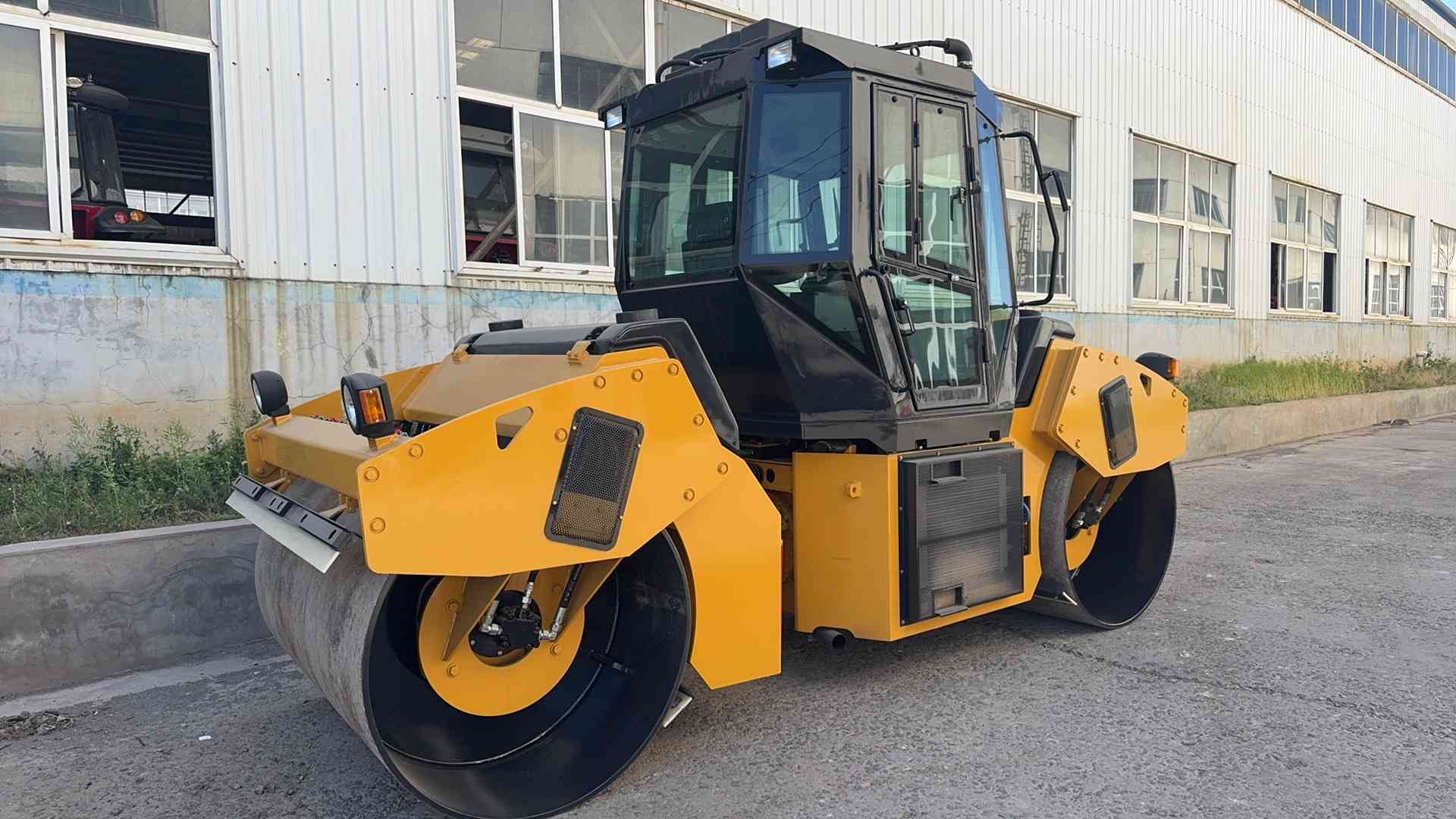
I. Three Major Categories of Road Roller Tonnages
1. Small Road Rollers (1-3 Tons)
Designed for light-duty construction, small road rollers excel in agility and compactness. Their narrow profile suits confined spaces, making them ideal for compaction in urban residential roads, sidewalks, parking lots, and other small-area sites. They shine in fine-scale tasks like backfill compaction after pipeline laying or renovation of aged road surfaces.
2. Medium-sized Road Rollers (8-16 Tons)
Medium-sized rollers strike a balance between compaction capability and mobility, serving as workhorses for mid-scale projects. With moderate working widths, they cover subgrade and pavement compaction for urban arterial roads, county-rural highways, and expressways. These rollers handle deep compaction of clay/sand bases and finish asphalt surfaces, becoming standard equipment for municipal and general road construction.
3. Large-scale Road Rollers (20+ Tons)
Characterized by robust compaction performance, large-scale rollers cater to heavy-duty projects. Their over-20-ton weight combined with large drums enables rapid compaction of extensive subgrades. They are widely used in major projects like expressways, airport runways, and port terminals—efficiently handling high-fill subgrade densification or rock-fill compaction to significantly advance construction schedules.
II. Core Application Scenarios for Different Tonnage Rollers
Small Rollers: Flexible Solutions for Fine Construction
Medium-sized Rollers: covering Routine Road Construction
Large-scale Rollers: Tackling Heavy-duty Projects
III. Key Selection Logic
When choosing a road roller, consider construction area size, material properties (e.g., clay/gravel), and compaction standards:
Road rollers of different tonnages collaborate in road construction, forming a comprehensive compaction system from subgrade to surface. With evolving engineering technologies, rollers are advancing toward intelligence and energy efficiency, continuously supporting critical transportation infrastructure projects.